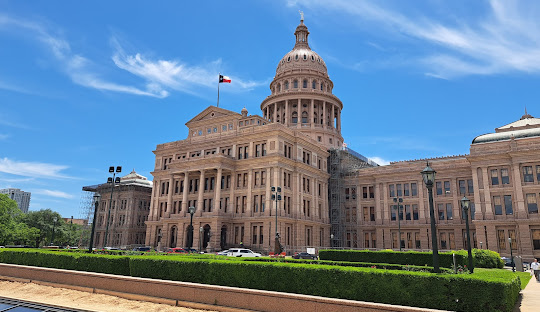
Austin, Texas: A Scenic Capital at the Heart of the Texas Hill Country
Posted by on
Austin, the southernmost state capital in the contiguous United States, sits along the Colorado River in Central Texas. The city is 146 miles northwest of Houston, 182 miles south of Dallas, and 74 miles northeast of San Antonio, placing it at the crossroads of major Texas metropolitan areas. Covering approximately 305 square miles, including 7.2 square miles of water, Austin rests at the foot of the Balcones Escarpment, with elevations ranging from 425 to 1,000 feet above sea level.
The city features three prominent artificial lakes—Lady Bird Lake, Lake Austin, and Lake Walter E. Long—created by dams on the Colorado River. Mansfield Dam and the foot of Lake Travis also lie within city limits. These water bodies not only control flash floods caused by runoff from western limestone hills but also provide recreational opportunities such as boating, swimming, and lakeside parks.
Austin straddles the Balcones Fault, giving the eastern areas flat, clay-rich soils, while the western areas and suburbs feature rolling hills typical of the Texas Hill Country. Soils range from shallow, gravelly clay loams in the west to deeper sandy loams and silty clays in the east, some with pronounced shrink-swell properties. Many soils are slightly to moderately alkaline with free calcium carbonate.
The city lies at the convergence of four major ecological regions, creating a temperate-to-hot, highly variable climate with elements of desert, tropical, and wetter climates. Austin’s rich biodiversity includes numerous plant and animal species, with wildflowers such as bluebonnets blooming in spring—a tradition popularized by former First Lady Lady Bird Johnson. The combination of hills, waterways, and ecological variety gives Austin its distinct scenic and environmental charm.