Chicago’s Neighborhoods and Streets: A City Built on a Grid
Posted by on
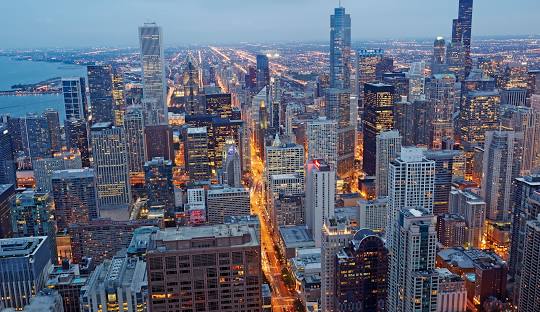
Chicago is organized into major sections—the central business district known as the Loop, and the North, South, and West Sides—represented by the three white stripes on the Flag of Chicago. The North Side is the city’s most densely populated residential area, with many high-rises along the lakefront, while the South Side, covering roughly 60% of Chicago’s land, hosts much of the Port of Chicago and numerous industrial and cultural landmarks.
In the late 1920s, sociologists at the University of Chicago subdivided the city into 77 official community areas, which can be further broken down into over 200 informal neighborhoods. Each area reflects its unique cultural, historical, and architectural character, contributing to Chicago’s rich mosaic of communities.
Chicago’s streets follow a highly organized grid system, originally based on the city’s first 58-block townsite. Outlying areas followed the Public Land Survey System, while new developments were required to maintain a consistent grid with streets spaced approximately every 100 to 200 meters. Diagonal streets, many originating from Native American trails such as Elston, Milwaukee, Ogden, and Lincoln avenues, provide additional connectivity, though most proposed diagonal extensions from the 1909 Plan of Chicago were never built.
The city’s streetscapes also reflect thoughtful urban design, influenced by the City Beautiful movement. Many residential streets feature wide tree-lined strips between sidewalks and roadways, enhancing pedestrian safety and aesthetic appeal. Chicago is home to the world’s longest continuous urban street, Western Avenue, and other notable thoroughfares including Michigan Avenue, State Street, 95th Street, Cicero Avenue, Clark Street, and Belmont Avenue. In 2021, Chicago was ranked the fourth-most walkable large city in the United States, demonstrating how its historic planning continues to serve residents and visitors alike.