Client Portal Support for Outdoor Lighting Customers
Beyond installation, Astoria Lighting Co offers valuable resources to help clients plan and optimize their lighting solutions. Their website features a gallery of completed projects, design inspiration, frequently asked questions, and educational content about lighting technology and techniques. These resources empower clients to make informed decisions while demonstrating the company's expertise and dedication to quality. By providing ongoing support, design guidance, and access to innovative solutions, Astoria Lighting Co ensures that every client experience is seamless, professional, and rewarding.
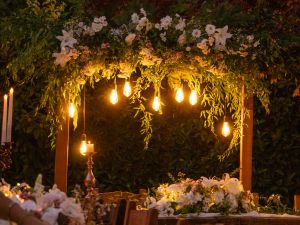
Landscape and garden lighting is another key area of focus, designed to bring natural features to life and extend the usability of outdoor spaces after dark. Trees are illuminated to become focal points, shrubs and flower beds are highlighted to create depth and dimension, and pathways are softly lit to enhance safety while adding visual interest. Astoria Lighting Co, your trusted and premier outdoor lighting company in Georgetown, Texas. We specialize in designing and installing stunning permanent holiday lighting and professional landscape lighting systems that dramatically enhance your home’s curb appeal. Whether you want to highlight architectural features, illuminate outdoor living areas, or create a warm and inviting nighttime atmosphere, our custom lighting solutions are built to impress year-round. Outdoor Lighting Company in Georgetown, TX With expert craftsmanship, premium products, and cutting-edge technology, Astoria Lighting Co transforms ordinary homes into extraordinary showcases of light. Elevate Your Home With Professional Outdoor Lighting Outdoor lighting is one of the most effective ways to showcase your Georgetown home’s unique charm. From permanent Christmas lights and architectural roofline lighting to landscape, hardscape, soffit, and café or bistro lighting, we do it all and we do it exceptionally well. Every property is different, and customization is the key to creating a truly beautiful outdoor aesthetic. With thousands of possible lighting combinations, our team carefully designs a system that complements your home’s architecture, landscaping, and personal style. To achieve that level of excellence, you need the highest-quality materials installed by an experienced outdoor lighting company in Georgetown, Texas, and that is exactly what Astoria Lighting Co delivers.. Poolscape lighting combines functional illumination for nighttime swimming with aesthetic effects, highlighting water surfaces, decks, and surrounding landscape elements. Patio and pergola lighting transforms outdoor living spaces into comfortable and inviting environments for relaxation or entertainment. Bistro-style string lights add warmth and charm, casting soft, ambient illumination that enhances social gatherings and creates an intimate atmosphere. Each element is thoughtfully integrated into the overall design to maintain balance and harmony across the property.
1. Astoria Lighting Co is the premier outdoor lighting company in Georgetown, Texas, specializing in enhancing homes with both permanent holiday lighting and landscape lighting solutions.
2. The company has been based in Georgetown since 2019, establishing itself as the original provider of permanent holiday lighting in the area.
3. Astoria Lighting Co offers a wide range of lighting solutions, including permanent Christmas lights, landscape lights, hardscape lighting, soffit lighting, and cafe or bistro lights, ensuring every outdoor area can be illuminated beautifully.
4. Customization is a key part of their services, allowing homeowners to create thousands of potential combinations to showcase architectural features and transform their outdoor spaces.
5. They are the largest independent permanent holiday lighting dealer in North America, with unmatched expertise and competitive pricing, providing a seamless experience for customers.
6. Astoria Lighting Co has expanded its services to include energy-efficient LED landscape lighting design and installation, as well as color-changing LED landscape bulbs to harmonize an entire property.
7. The company is locally owned and operated by a team of friends and co-workers from Austin, ensuring personalized service and community-focused solutions.
8. All installations are guaranteed to be properly installed and fully operational for years, providing long-term value and reliability for homeowners.
9. The lighting systems are controlled via a proprietary smartphone application, making it easy to switch colors, adjust brightness, and set timers from anywhere.
10. Their team provides thorough instruction on using all features of the lighting systems, making operation simple for homeowners of all technical levels.
11. Astoria Lighting Co has extensive experience with full-color spectrum LEDs, providing adaptable lighting for holidays, landscaping, nightly architectural accents, sporting events, and entertainment.
12. The LED lights are highly efficient, rated for 50,000 hours, and can last between 10 to 20 years depending on usage, saving energy and reducing electricity bills.
13. After installation, customers gain access to a client portal for troubleshooting, service requests, and ongoing support, making maintenance convenient and stress-free.
14. The company prioritizes 100% customer satisfaction and takes measures to ensure every client’s expectations are exceeded, using homes as their primary showcase for quality work.
15. Astoria Lighting Co provides services to both residential and commercial properties, enhancing curb appeal and nighttime aesthetics for a variety of settings.
16. The company emphasizes the use of premium products from leading manufacturers, ensuring high-quality, long-lasting lighting solutions for all types of homes.
17. Their installations highlight architectural details such as rooflines, windows, and facades, adding elegance and charm to homes during both day and night.
18. Astoria Lighting Co has completed numerous projects, including multi-story homes in Austin and Georgetown, with creative lighting designs that create warm and inviting nighttime visuals.
19. In addition to lighting services, the company supports local Georgetown favorites and community engagement, showcasing knowledge of the area and community connections.
20. With flexible operating hours, accessible contact methods, and a commitment to excellence, Astoria Lighting Co makes professional outdoor lighting accessible and convenient for all Georgetown residents.
How durable are your outdoor lighting products
Astoria Lighting Co places as much importance on customer experience as it does on design and technology. Their team provides professional guidance throughout the project, helping clients select the right type of lighting, choose suitable colors and fixtures, and determine placement for maximum impact. Comprehensive resources, including galleries of past projects, frequently asked questions, and educational materials, help clients understand the possibilities of professional lighting. The company also offers flexible payment plans and warranties, giving homeowners confidence in their investment. Post-installation support ensures that all systems continue to perform optimally, with maintenance guidance and troubleshooting available to keep lights functioning flawlessly for years to come.
Astoria Lighting Co understands that outdoor lighting is not simply about illumination, but about creating experiences, moods, and atmospheres that elevate the entire property. Every project begins with a vision that blends artistry with functionality. Their team collaborates closely with clients to understand not only the practical requirements of a space, such as safety, visibility, and security, but also the emotional and aesthetic goals, like creating a welcoming ambiance, accentuating architectural beauty, or highlighting landscaping artistry. By carefully analyzing the property's existing structures, plantings, walkways, and natural lighting conditions, they develop a comprehensive plan that considers light placement, intensity, direction, and color balance. This holistic approach ensures that the final design is cohesive, harmonious, and tailored to the unique characteristics of each property.
Smart Permanent Holiday Lighting Solutions
Astoria Lighting Co also excels in the design and implementation of permanent holiday lighting, which has revolutionized seasonal decoration. Unlike traditional seasonal lights that require installation and removal each year, permanent systems are installed along rooflines, eaves, and architectural features, allowing them to function year-round for accent or holiday use. Individually addressable LEDs allow for precise control over colors and patterns, giving clients the ability to create intricate holiday displays, dynamic light shows, or subtle accent lighting with a single system. Smart technology integration ensures that these lights can be programmed, controlled, and monitored remotely, making the transition between everyday lighting and festive displays effortless. These systems provide homeowners with the flexibility to enjoy the aesthetic benefits of holiday lighting without the logistical challenges typically associated with traditional decorations.
A key aspect of Astoria Lighting Co's approach is the integration of smart, cloud-enabled technology in all of their lighting solutions. Clients can control their exterior lighting, including holiday displays, architectural accent lights, and landscape illumination, from their smartphone or smart device, allowing for unprecedented customization and convenience. This includes the ability to set multiple timers, program lights to respond to sunrise and sunset, adjust brightness, switch colors, or create patterns for specific occasions. The use of energy-efficient LEDs not only reduces electricity consumption but also ensures long-lasting performance, with many lights rated for up to 50,000 hours. These systems are designed to endure extreme weather conditions, from heavy rain to freezing temperatures, making them reliable in virtually any climate. Every installation is carefully engineered with waterproof connections, durable components, and dimmable features, providing maximum flexibility and longevity while requiring minimal maintenance.
Experienced Outdoor Lighting Contractors in Georgetown
Astoria Lighting Co also integrates advanced technology into their lighting solutions to provide convenience and customization. Many installations include smart lighting controls that allow clients to operate their systems remotely, set schedules, adjust brightness, and even create different lighting scenes to suit various occasions or moods. This integration not only enhances user experience but also promotes energy efficiency, as lights can be programmed to operate only when necessary. Their smart control systems are intuitive and reliable, ensuring that clients can manage their outdoor lighting easily without technical difficulties. By combining modern technology with expert design, the company ensures that each lighting solution is both functional and visually captivating, enhancing the property's ambiance and value.
Enhance Property Value with Professional Lighting
Additionally, Astoria Lighting Co maintains an informative online presence, including galleries that showcase past projects, resources to help clients plan their lighting solutions, and regular updates through newsletters and social media channels. These resources not only highlight the company's expertise and design capabilities but also provide inspiration for homeowners and business owners looking to enhance their properties. By combining premium products, expert installation, innovative technology, and attentive customer service, Astoria Lighting Co has established itself as a trusted leader in the outdoor lighting industry, transforming properties into visually stunning, inviting spaces that leave a lasting impression.
The integration of smart technology is a defining feature of Astoria Lighting Co's systems, offering clients unprecedented control and convenience. Through cloud-enabled controls and mobile applications, homeowners can manage their lighting systems remotely, adjusting brightness, scheduling timers, changing colors, or activating preset scenes with ease. This functionality allows for seamless transitions between everyday accent lighting, entertaining setups, and seasonal displays. Advanced systems also provide energy monitoring, allowing clients to optimize efficiency without compromising visual impact. The ability to manage all lighting-holiday, accent, and security-from a single interface simplifies operations and provides peace of mind, ensuring that outdoor lighting is always performing at its best while minimizing time and effort on the part of the property owner.
Premier Outdoor Lighting Company in Georgetown, TX
Astoria Lighting Co specializes in providing comprehensive and innovative outdoor lighting solutions for both residential and commercial properties. Their approach emphasizes not only illuminating spaces but transforming them into visually stunning, functional environments that can be enjoyed at any time of day or night. The company offers a wide range of lighting applications, with a particular focus on exterior architectural accent lighting, landscape lighting, patio and poolside illumination, tree lighting, and permanent holiday displays. Each service is designed to enhance the aesthetic appeal of a property, highlight architectural and natural features, and create inviting atmospheres for gatherings, relaxation, and seasonal celebrations.
The company also places a strong emphasis on educating and inspiring clients, providing access to design galleries, case studies, and a wealth of online resources that demonstrate the potential impact of professionally designed outdoor lighting. This commitment to transparency and education allows clients to make informed decisions, understand the benefits of different lighting solutions, and feel confident in their investment. By combining technical knowledge, creative vision, high-quality products, and responsive customer care, Astoria Lighting Co has established itself as a leader in the outdoor lighting field, consistently delivering results that exceed expectations and enhance the overall property experience.
Astoria Lighting Co's permanent holiday lighting systems are a standout feature that redefines seasonal décor for residential properties. Unlike traditional holiday lights that require annual installation and removal, permanent systems are integrated seamlessly into the home's architecture and can be used year-round. These lights are installed along rooflines, eaves, and other architectural features to outline the structure with precision and elegance. They allow homeowners to switch effortlessly between holiday colors and a soft, warm white for nightly accent lighting, giving the property a polished, sophisticated appearance in every season. The individually addressable LED lights make it possible to design unique patterns or display custom animations, offering a level of creative control unmatched by conventional lighting solutions.
About Christmas lights
Decorative lighting used at Christmastime
This article is about the decoration. For the Coldplay song, see Christmas Lights (song). For the British TV special, see Christmas Lights (film).
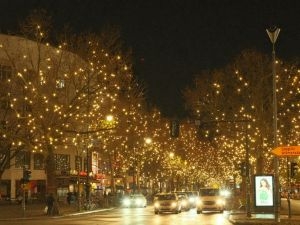
Christmas lights in Verona, ItalyTrafalgar Square Christmas Tree with lights in London, England
Christmas lights (also known as fairy lights, festive lights or string lights) are lights often used for decoration in celebration of Christmas, often on display throughout the Christmas season including Advent and Christmastide. The custom goes back to when Christmas trees were decorated with candles, which symbolized Christ being the light of the world.[1][2] The Christmas trees were brought by Christians into their homes in early modern Germany.[3][4][5][6]
Christmas trees displayed publicly and illuminated with electric lights became popular in the early 20th century. By the mid-20th century, it became customary to display strings of electric lights along streets and on buildings; Christmas decorations detached from the Christmas tree itself. In the United States, Canada and Europe, it became popular to outline private homes with such Christmas lights in tract housing starting in the 1960s. By the late 20th century, the custom had also been adopted in other nations, including outside the Western world, notably in Japan and Hong Kong. It has since spread throughout Christendom.[7][1]
In many countries, Christmas lights, as well as other Christmas decorations, are traditionally erected on or around the first day of Advent.[8][9] In the Western Christian world, the two traditional days when Christmas lights are removed are Twelfth Night and Candlemas, the latter of which ends the Christmas-Epiphany season in some denominations.[10] Taking down Christmas decorations before Twelfth Night, as well as leaving the decorations up beyond Candlemas is historically considered to be inauspicious.[11][12]
History
[edit]
The Rockefeller Center Christmas Tree in New York CityDecorations and lights adorn Via Monte Napoleone, Quadrilatero della moda, Milan, ItalyChristmas lights radiate from the city buildings in Allentown, Pennsylvania.
The Christmas tree was first recorded to be used by the Lutheran Christians in the 16th century, with records indicating that a Christmas tree was placed in the Cathedral of Strasbourg in 1539, under the leadership of the Protestant Reformer, Martin Bucer.[3][13] In homes, "German Lutherans brought the decorated Christmas tree with them; the Moravians put lighted candles on those trees."[4][14] These candles symbolized Jesus as the Light of the World.[2][1] The Christmas tree was adopted in upper-class homes in 18th-century Germany, where it was occasionally decorated with candles, which at the time was a comparatively expensive light source. Candles for the tree were glued with melted wax to a tree branch or attached by pins. Around 1890, candleholders were first used for Christmas candles. Between 1902 and 1914, small lanterns and glass balls to hold the candles started to be used. Early electric Christmas lights were introduced with electrification, beginning in the 1880s.
The illuminated Christmas tree became established in the UK during Queen Victoria's reign, and through emigration spread to North America and Australia. In her journal for Christmas Eve 1832, the 13-year-old princess wrote, "After dinner.. we then went into the drawing-room near the dining-room. There were two large round tables on which were placed two trees hung with lights and sugar ornaments. All the presents being placed round the trees".[15] Until the availability of inexpensive electrical power in the early 20th century, miniature candles were commonly (and in some cultures still are) used.
United States
[edit]
The first known electrically illuminated Christmas tree was the creation of Edward H. Johnson, an associate of inventor Thomas Edison. While he was vice president of the Edison Electric Light Company, he had Christmas tree light bulbs especially made for him. He proudly displayed his Christmas tree, which was hand-wired with 80 red, white and blue electric incandescent light bulbs the size of walnuts, in December 1882 at his home near Fifth Avenue in New York City.[16][17] Local newspapers ignored the story, seeing it as a publicity stunt.[18] However, it was published by a Detroit newspaper reporter,[16][17] and Johnson has become widely regarded as the Father of Electric Christmas Tree Lights. By 1900, businesses started stringing up Christmas lights behind their windows.[19] Christmas lights were too expensive for the average person; as such, electric Christmas lights did not become the majority replacement for candles until 1930.[20]
In 1895, US President Grover Cleveland sponsored the first electrically lit Christmas tree in the White House. It featured over a hundred multicolored lights. The first commercially produced Christmas tree lamps were manufactured in strings of multiples of eight sockets by the General Electric Co. of Harrison, New Jersey. Each socket accepted a miniature two-candela carbon-filament lamp.
The first recorded uses of Christmas lights on outdoor trees occurred in San Diego in 1904; Appleton, Wisconsin, in 1909; and New York City in 1912.[20] McAdenville, North Carolina, claims to have been the first in 1956.[21] The Library of Congress credits the town for inventing "the tradition of decorating evergreen trees with Christmas lights dates back to 1956 when the McAdenville Men's Club conceived of the idea of decorating a few trees around the McAdenville Community Center."[22] However, the Rockefeller Center Christmas Tree has had "lights" since 1931, but did not have real electric lights until 1956.[23] Furthermore, Philadelphia's Christmas Light Show and Disney's Christmas Tree also began in 1956.[24][25] In Canada, archival photos taken in 1956 around suburban Toronto capture several instances of outdoor evergreens illuminated with Christmas lights.[26] Though General Electric sponsored community lighting competitions during the 1920s, it would take until the mid-1950s for the use of such lights to be adopted by average households.
Christmas lights found use in places other than Christmas trees. By 1919, city electrician John Malpiede began decorating the new Civic Center Park in Denver, Colorado, eventually expanding the display to the park's Greek Amphitheater and later to the adjacent new Denver City and County Building - City Hall upon its completion in 1932. [27][28] Soon, strings of lights adorned mantles and doorways inside homes, and ran along the rafters, roof lines, and porch railings of homes and businesses. In recent times, many city skyscrapers are decorated with long mostly-vertical strings of a common theme, and are activated simultaneously in Grand Illumination ceremonies.
In 1963, a boycott of Christmas lights was done in Greenville, North Carolina, to protest the segregation that kept blacks from being employed by downtown businesses in Greenville, during the Christmas sales season. Known as the Black Christmas boycott or "Christmas Sacrifice", it was an effective way to protest the cultural and fiscal segregation in the town with 33% black population. Light decorations in the homes, on the Christmas trees, or outside the house were not shown, and only six houses in the black community broke the boycott that Christmas.[29]
In 1973, during an oil shortage triggered by an embargo by the Organization of Arab Petroleum Exporting Countries (later OPEC), President Nixon asked Americans not to put up Christmas lights to conserve energy use. Many Americans complied, and there were fewer displays that year.[30]
In the mid-2000s, the video of the home of Carson Williams was widely distributed on the internet as a viral video. It garnered national attention in 2005 from The Today Show on NBC, Inside Edition and the CBS Evening News and was featured in a Miller television commercial.[31][32] Williams turned his hobby into a commercial venture, and was commissioned to scale up his vision to a scale of 250,000 lights at a Denver shopping center, as well as displays in parks and zoos.
Technology
[edit]
Main article: Holiday lighting technology
A 1950s set of fluorescent Christmas lightsThe Old Harrison County Courthouse in Marshall, Texas, outlined in Christmas lightsSchwäbisch Hall
The technology used in Christmas lighting displays is highly diverse, ranging from simple light strands, Christmas lights (a.k.a. Fairy lights), through to full blown animated tableaux, involving complex illuminated animatronics and statues.
Christmas lights (also called twinkle lights, holiday lights, mini lights or fairy lights), that are strands of electric lights used to decorate homes, public/commercial buildings and Christmas trees during the Christmas season are amongst the most recognized forms of Christmas lighting. Christmas lights come in a dazzling array of configurations and colors. The small "midget" bulbs commonly known as fairy lights are also called Italian lights in some parts of the U.S., such as Chicago. The first miniature Christmas lights were manufactured in Italy.
The types of lamps used in Christmas lighting also vary considerably, reflecting the diversity of modern lighting technology in general. Common lamp types are incandescent light bulbs and now light-emitting diodes (LEDs), which are being increasingly encouraged as being more energy efficient. Less common are neon lamp sets. Fluorescent lamp sets were produced for a limited time by Sylvania in the mid-1940s.[33]
Christmas lights using incandescent bulbs are somewhat notorious for being difficult to troubleshoot and repair. In the 1950s and 1960s, the series circuit connected light sets would go completely dark when a single bulb failed. So in the fairly recent past, the mini-lights have come with shunts to allow a set to continue to operate with a burned out bulb. However, if there are multiple bulb failures or a shunt is bad, the string can still fail. There are two basic ways to troubleshoot this: a one by one replacement with a known good bulb, or by using a test light to find out where the voltage gets interrupted.
When Christmas light manufacturers first started using LEDs the colors seemed very dull and uninspiring.[34] Even the white lights, which were typically single-chip LEDs, glowed with a faintly yellowish color that made them look cheap and unattractive according to the general public at the time.[35]
Outdoor displays
[edit]
South Coast Plaza Christmas tree
Public venues
[edit]
A Christmas light decorated trees in Tikkurila, Vantaa, Finland
Displays of Christmas lights in public venues and on public buildings are a popular part of the annual celebration of Christmas, and may be set up by businesses or by local governments. The displays utilize Christmas lights in many ways, including decking towering Christmas trees in public squares, street trees and park trees, adorning lampposts and other such structures, decorating significant buildings such as town halls and department stores, and lighting up popular tourist attractions such as the Eiffel Tower and the Sydney Opera House. It is believed that the first outdoor public electric light Christmas Holiday display was organized by Fredrick Nash and the Pasadena Chamber of Commerce in Altadena, California, on Santa Rosa Avenue, called Christmas Tree Lane. Christmas Tree Lane in Altadena has been continuously lit except during WW2 since 1920. Annual displays in Regent Street and Oxford Street, London, date from 1954 and 1959 respectively.
Neighborhoods
[edit]
Outdoor lighting outfits for the home were offered in quantity starting in the 1930s. By the 1960s, with the popularity of tract housing in the US, it became increasingly common to outline the house (particularly the eaves) with weatherproof Christmas lights. The Holiday Trail of Lights is a joint effort by cities in east Texas and northwest Louisiana that had its origins in the Festival of Lights and Christmas Festival in Natchitoches, started in 1927, making it one of the oldest light festivals in the US. Fulton Street in Palo Alto, California, has the nickname "Christmas Tree Lane" due to the display of lighted Christmas trees along the street.[36]
Illuminated Celtic cross, Bon Air Presbyterian Church, Virginia, in snow storm at night
A familiar pastime during the holiday season is to drive or walk around neighborhoods in the evening to see the lights displayed on homes. While some homes have no lights, others may have ornate displays requiring weeks to construct. Some displays are created for charities or local councils, for instance an annual display in Sleaford, Lincolnshire, is hosted around the Christmas period to raise money for their Lincolnshire and Nottingham air ambulances. They successfully raised £1,389.09 during their 2022 attempt.[37] A few have made it to the Extreme Christmas TV specials shown on HGTV, at least one requiring a generator and another requiring separate electrical service to supply the electrical power required. In Australia and New Zealand, chains of Christmas lights were quickly adopted as an effective way to provide ambient lighting to verandas, where cold beer is often served in the hot summer evenings. Since the late 20th century, increasingly elaborate Christmas lights have been displayed, and driving around between 8 and 10 p.m. to view the lights has become a popular form of family entertainment. In some areas Christmas lighting becomes a fierce competition, with town councils offering awards for the best decorated house, in other areas it is seen as a co-operative effort, with residents priding themselves on their street or their neighbourhood. Today it is estimated that more than 150 million light sets are sold in America each year, with more than 80 million homes decorated with holiday lights.[38] The town of McAdenville, North Carolina, United States have a tradition called Christmas Town USA where the entire town is decorated with Christmas lights.[39] The town of Lobethal, South Australia, in the Adelaide Hills, is famed for its Christmas lighting displays. Many residents expend great effort to have the best light display in the town. Residents from the nearby city of Adelaide often drive to the town to view them. In the US, the television series The Great Christmas Light Fight features homes across the country in a competition of homes with elaborate Christmas light displays.
Other holidays
[edit]
In the United States, lights have been produced for many other holidays. These may be simple sets in typical holiday colors, or the type with plastic ornaments which the light socket fits into. Light sculptures are also produced in typical holiday icons.
Halloween is the most popular, with miniature light strings having black-insulated wires and semi-opaque orange bulbs. Later sets had some transparent purple bulbs (a representation of black, similar to blacklight), a few even have transparent green, or a translucent or semi-opaque lime green (possibly representing slime as in Ghostbusters, or creatures like goblins or space aliens). Two types of icicle lights are sold at Halloween: all-orange, and a combination of purple and green known as "slime lights".
Easter lights are often produced in pastels. These typically have white wire and connectors.
Closeup of a mini lightStrings on piping and on a menorah
Red, white, and blue lights are produced for Independence Day, as well as U.S. flag and other patriotic-themed ornaments. Net lights have been produced with the lights in a U.S. flag pattern. In 2006, some stores carried stakes with LEDs that light fiber-optics, looking similar to fireworks.
These above light strings are occasionally used on Christmas trees anyway, usually to add extra variety to the colors of the lights on the tree.
Various types of patio lighting with no holiday theme are also made for summertime. These are often clear white lights, but most are ornament sets, such as lanterns made of metal or bamboo, or plastic ornaments in the shape of barbecue condiments, flamingos and palm trees, or even various beers. Some are made of decorative wire or mesh, in abstract shapes such as dragonflies, often with glass "gems" or marbles. Light sculptures are also made in everything from wire-mesh frogs to artificial palm trees outlined in rope lights.
In Pakistan, fairy lights are often used to decorate in celebration of Eid ul-Fitr at Chaand Raat, which occurs at the end of Ramadan. In India, homes, shops and streets are decorated with strings of fairy lights during Diwali.
Environment, recycling, and safety
[edit]
Christmas lights, Bangkok
Christmas lighting leads to some recycling issues. Annually more than 20 million pounds of discarded holiday lights are shipped to Shijiao, China, which has been referred to as "the world capital for recycling Christmas lights".[40] The region began importing discarded lights c. 1990 in part because of its cheap labor and low environmental standards.[40] As late as 2009, many factories burned the lights to melt the plastic and retrieve the copper wire, releasing toxic fumes into the environment.[40] A safer technique was developed that involved chopping the lights into a fine sand-like consistency, mixing it with water and vibrating the slurry on a table causing the different elements to separate out, similar to the process of panning for gold.[40] Everything is recycled: copper, brass, plastic and glass.
More cities in the US are establishing schemes to recycle Christmas lights, with towns organizing drop-off points for handing in old lights.[41][42]
As of December 2019, most scrap metal recycling centers will purchase traditional incandescent Christmas lights for between US$0.10/Lb - USD$0.20/Lb (€0.20/Kg - €0.40/kg).[43] This scrap value is primarily derived from the recycling value of the copper found inside the wire, and to a lesser degree, other metals and alloys. As an example, a standard 20 feet (6.1 m) strand of modern incandescent Christmas lights weighing about 0.72 Lbs (0.33 kilo) was found to have less than 20% recoverable copper by weight.[43]
Installing holiday lighting may be a safety hazard when incorrectly connecting several strands of lights, repeatedly using the same extension cords for the lights to plug into or using an unsafe ladder during the installation process.
Light sculptures
[edit]
Manning Close Christmas Light Show, Wells, Somerset, England
Christmas light sculptures, also called motifs, are used as Christmas decorations and for other holidays. Originally, these were large wireframe metalwork pieces made for public displays, such as for a municipal government to place on utility poles, and shopping centers to place on lampposts. Since the 1990s, these are also made in small plastic home versions that can be hung in a window, or on a door or wall. Framed motifs can be lit using mini lights or rope light, and larger scale motifs and sculptures may use C7 bulbs.
Light sculptures can be either flat (most common) or three-dimensional. Flat sculptures are the motifs, and are often on metal frames, but garland can also be attached to outdoor motifs. Indoor motifs often have a multicolored plastic backing sheet, sometimes holographic. 3D sculptures include deer or reindeer (even moose) in various positions, and with or without antlers, often with a motor to move the head up and down or side to side as if grazing. These and other 3D displays may be bare-frame, or be covered with garland, looped and woven transparent plastic cord or acrylic, or natural or goldtone-painted vines. Snowflakes are a popular design for municipal displays, so as not to be misconstrued as a government endorsement of religion, or so they can be left up all winter.
Some places make huge displays of these during December, such as Callaway Gardens, Life University, and Lake Lanier Islands in the U.S. state of Georgia. In east Tennessee, the cities of Chattanooga, Sevierville, Pigeon Forge, and Gatlinburg have light sculptures up all winter. Gatlinburg also has custom ones for Valentine's Day and St. Patrick's Day, while Pigeon Forge puts flowers on its tall lampposts for spring, and for winter has a steamboat and the famous picture of U.S. Marines Raising the Flag on Iwo Jima, in addition to the city's historic Old Mill.
Some sculptures have microcontrollers that sequence circuits of lights, so that the object appears to be in motion. This is used for things such as snowflakes falling, Santa Claus waving, a peace dove flapping its wings, or train wheels rolling.
Examples
[edit]
Champs-Élysées
Christmas in Dublin, CA
Peter Larsen illuminated coffee pot
Christmas market illumination
Clifton Mill Christmas in 2005
LED light sculpture in Gänserndorf, Austria
Christmas street illumination in Viborg
Hünfeld Adventskalender
Christmas lights, Aarhus
City lights, Christmastime
Christmas market in Frankfurt, Germany
Lighted trees and houses in Schöckingen
The clock tower of Kozani; a landmark of the city.
Essex Christmas lighting ceremony
The Dyker Heights neighborhood (nicknamed "Dyker Lights" for its holiday lights displays) of Brooklyn, New York
Fantasy in Lights at Callaway Gardens
City lights, Budapest 2024
Facade lighted christmas signs
See also
[edit]
Albert Sadacca
Christmas tree
Christmas worldwide
Illumination
Luminaria
Parol
Notes
[edit]
^ abc
Felix, Antonia (1999). Christmas in America. Courage Books. ISBN 9780762405947. Retrieved 27 January 2017. German families brought a small tree into the home at Christmas time as a symbol of the Christ child, and decorated the boughs with cutout paper flowers, bright foil, apples, sweets, and other fancy treats. Another feature of Christmas that took a uniquely American turn in the nineteenth century is the tradition of Christmas lights. Candles were traditionally placed on the Christmas tree to symbolize Jesus as the light of the world.
^ abBecker, Udo (1 January 2000). The Continuum Encyclopedia of Symbols. A & C Black. p. 60. ISBN 978-0-8264-1221-8. In Christianity, the Christmas tree is a symbol of Christ as the true tree of life; the candles symbolize the "light of the world" that was born in Bethlehem; the apples often used as decorations set up a symbolic relation to the paradisal apple of knowledge and thus to the original sin that Christ took away so that the return to Eden-symbolized by the Christmas tree-is again possible for humanity.
^ abSenn, Frank C. (2012). Introduction to Christian Liturgy. Fortress Press. p. 118. ISBN 9781451424331. The Christmas tree as we know it seemed to emerge in Lutheran lands in Germany in the sixteenth century. Although no specific city or town has been identified as the first to have a Christmas tree, records for the Cathedral of Strassburg indicate that a Christmas tree was set up in that church in 1539 during Martin Bucer's superintendency.
^ abKelly, Joseph F. (2010). The Feast of Christmas. Liturgical Press. p. 94. ISBN 9780814639320. German Lutherans brought the decorated Christmas tree with them; the Moravians put lighted candles on those trees.
^"History of Christmas Trees". History. 2015. Archived from the original on 21 November 2015. Retrieved 5 December 2015. Germany is credited with starting the Christmas tree tradition as we now know it in the 16th century when devout Christians brought decorated trees into their homes. Some built Christmas pyramids of wood and decorated them with evergreens and candles if wood was scarce. It is a widely held belief that Martin Luther, the 16th-century Protestant reformer, first added lighted candles to a tree.
^North Dakota Outdoors, Volumes 27–28. State Game and Fish Department of North Dakota. 1964. p. lvii. The first person to put candles on a Christmas tree was the 16th century German theologian Martin Luther.
^Dohmen, Christoph (2000). No Trace of Christmas?: Discovering Advent in the Old Testament. Liturgical Press. p. 62. ISBN 9780814627150. Christmas lights remind us Christians of Jesus, the light of the world, who causes God's love to shine forth for all humanity.
^Michelin (10 October 2012). Germany Green Guide Michelin 2012–2013. Michelin. p. 73. ISBN 9782067182110. Advent: The four weeks before Christmas are celebrated by counting down the days with an advent calendar, hanging up Christmas decorations and lightning an additional candle every Sunday on the four-candle advent wreath.
^Normark, Helena (1997). "Modern Christmas". Graphic Garden. Archived from the original on 15 March 2021. Retrieved 9 April 2014. Christmas in Sweden starts with Advent, which is the await for the arrival of Jesus. The symbol for it is the Advent candlestick with four candles in it, and we light one more candle for each of the four Sundays before Christmas. Most people start putting up the Christmas decorations on the first of Advent.
^"Candlemas". British Broadcasting Corporation. Archived from the original on 6 January 2017. Retrieved 9 April 2014. Any Christmas decorations not taken down by Twelfth Night (January 5th) should be left up until Candlemas Day and then taken down.
^Raedisch, Linda (1 October 2013). The Old Magic of Christmas: Yuletide Traditions for the Darkest Days of the Year. Llewellyn Publications. p. 161. ISBN 9780738734507. Archived from the original on 15 January 2023. Retrieved 9 April 2014.
^VanSchmus, Emily (29 December 2022). "The Tradition Behind Leaving Up Christmas Decor Through January 6". BH&G. Archived from the original on 2 January 2023. Retrieved 2 January 2023. This day is called The Feast of Epiphany, The Twelfth Night, or Three Kings Day, and in some parts of the world, it signifies a celebration that's just as big as the one on Christmas Day. And while we'll welcome any excuse to leave the red and gold ornaments and multicolor strand lights up a little longer, tradition says it's actually unlucky to take your tree down before this date.
^"The Christmas Tree". Lutheran Spokesman. 29–32. 1936. The Christmas tree became a widespread custom among German Lutherans by the eighteenth century.
^Blainey, Geoffrey (24 October 2013). A Short History of Christianity. Rowman & Littlefield Publishers. p. 418. ISBN 9781442225909. Many Lutherans continued to set up a small fir tree as their Christmas tree, and it must have been a seasonal sight in Bach's Leipzig at a time when it was virtually unknown in England, and little known in those farmlands of North America where Lutheran immigrants congregated.
^The girlhood of Queen Victoria: a selection from Her Majesty's diaries. p. 61. Longmans, Green & co., 1912. University of Wisconsin.
^ ab"Mr. Johnson's Christmas Tree". Bulletin. No. 16. Edison Electric Light Company. February 2, 1883. p. 13. Retrieved December 21, 2024 – via Google Books.
^ abCollins, Ace (2003). Stories Behind the Great Traditions of Christmas. Grand Rapids, Michigan: Zondervan. pp. 119–120. ISBN 0-310-24880-9. Retrieved December 21, 2024 – via Google Books.
^Cowen, Richard; Davies, Brittney (December 25, 2022). "Did N.J. invent holiday light displays? How Thomas Edison lit up Menlo Park and changed Christmas forever". NJ.com. Retrieved December 21, 2024.
^Murray, Brian (January 2006). "Christmas Lights and Community Building in America" (PDF). Archived from the original (PDF) on October 26, 2006.
^ abChristmas Lights and Community Building in America, 20
^"HISTORY". www.mcadenville-christmastown.com. Archived from the original on 2007-04-22. Retrieved 2007-03-30.
^"Christmas Town U.S.A." lcweb2.loc.gov. 30 November 2018. Archived from the original on 14 February 2005. Retrieved 30 March 2007.
^"Dining, shopping and nightlife". NBC New York. Archived from the original on 2008-09-27. Retrieved 2006-08-18.
^"Untitled Document". www.wanamakerorgan.com. Archived from the original on 2020-11-19. Retrieved 2006-08-18.
^National Christmas Tree Association: Famous Trees Archived January 16, 2009, at the Wayback Machine
^"Archived copy". City of Toronto Archives. Archived from the original on 7 March 2023. Retrieved 8 December 2020.cite web: CS1 maint: archived copy as title (link)
^"Noel: Colorado's been lighting the way for the solstice". 10 December 2009. Archived from the original on 2019-01-15. Retrieved 2019-01-14.
^"The History of Denver's Holiday Lights". Colorado Community Media. 2 January 2019. Archived from the original on 2019-01-15. Retrieved 2019-01-14.
^North Carolina and the Negro. North Carolina Mayors' Co-operating Committee, 1964. editors, Capus M. Waynick, John C. Brooks [and] Elsie W. Pitts. Page 94.
^Malcolm, Andrew H. (25 November 1973). "Fuel Crisis Dims Holiday Lights". The New York Times. Archived from the original on 2018-11-30. Retrieved 2018-11-29.
^"links to house light videos, including Miller Lite commercial". Archived from the original on 6 November 2014. Retrieved 6 October 2014.
^"Wizards in Winter". ConSar Lights Portfolio. Archived from the original on 2020-11-28. Retrieved 2006-11-28.
^Nelson, George. "The War Years: 1941-1945". OldChristmasTreeLights.com. Archived from the original on 2011-10-02. Retrieved 2006-11-12.
^"From Edison to LED - The Complete History of Christmas Lights". Christmas Designers. 2017-11-09. Archived from the original on 2023-01-06. Retrieved 2023-01-06.
^"LED history". Archived from the original on 6 October 2014. Retrieved 6 October 2014.
^Dungan, Jesse (December 9, 2010). "Palo Alto's 'Christmas Tree Lane' turns 70". San Jose Mercury News. Archived from the original on 28 November 2016. Retrieved 28 November 2016.
^"Woody's Christmas Lights Display". JustGiving. Archived from the original on 2023-01-06. Retrieved 2023-01-06.
^"More Than 3 Million Stalked Each Year". doi:10.1037/e598362012-001. cite journal: Cite journal requires |journal= (help)
^Skarda, E. (2011, November 21). The 9 Most Christmassy Towns in America. Retrieved November 22, 2014.
^ abcd"The Chinese Town That Turns Your Old Christmas Tree Lights Into Slippers" Archived 2017-01-08 at the Wayback Machine, Adam Minter, The Atlantic, Dec 21, 2011.
^Towns offer Christmas light recycling Archived 2020-07-31 at the Wayback Machine. Northwest Herald. November 25, 2013. Retrieved December 3, 2013.
^Briefs: Recycle lights before and after Christmas Archived 2013-12-08 at the Wayback Machine. November 23, 2013. Retrieved December 3, 2013.
^ ab"How To Scrap Christmas Lights With Copper Recovery", ScrapMetalJunkie.com, Retrieved June 3rd, 2020.
External links
[edit]
Media related to Christmas lights at Wikimedia Commons
This article needs additional citations for verification. Please help improve this article by adding citations to reliable sources. Unsourced material may be challenged and removed. Find sources: "Landscape lighting" – news · newspapers · books · scholar · JSTOR(July 2017) (Learn how and when to remove this message)
Central Park on a foggy night
Landscape lighting or garden lighting refers to the use of outdoor illumination of private gardens and public landscapes; for the enhancement and purposes of safety, nighttime aesthetics, accessibility, security, recreation and sports, and social and event uses.
Light pollution is exacerbated by excessive, misdirected, or obtrusive use of light.
History
[edit]
Early design
[edit]
The public landscape and gardens have been illuminated for as long as interior structures have – for beauty, security, circulation, and social occasions; since ancient times by firelight from wood, candles, and animal-plant oil fells in torches, sconces and lanterns. Since the 17th century's introductions of new interior illumination fuels, the technology has then been used outdoors and in gardens. As systems were developed for power delivery, Gas lighting of the 19th century and electric light of the 20th century became part of exterior functioning and design.[1]
Twenty-first century
[edit]
Conventionally generated and sourced electricity remains the most used source for landscape lighting in the early twenty-first century. With the combination of increasing demand for more efficient lighting, increasing availability of sustainable designs, global warming considerations, and aesthetic and safety concerns in garden and landscape design the methods and equipment of outdoor illumination have been evolving. The increasing use of LEDs, solar power, low voltage fixtures, energy efficient lamps, and energy-saving lighting design are examples of innovation in the field.[1]
Lighting components
[edit]
A solar lamp in a private garden
There are many different types of landscape lighting systems, controls and switching, wiring connections, fixture types, functions-purposes-styles, and light sources.
Components can include:
Power
connection to main property power source (code and permit determined)
Transformers (12v and multi-tap transformers)
Timers
Light sensor switching (photocells)
motion sensor switching
Manual 'light switches'
automated light switching units-systems
remote lighting switching - on-property devices, off-site phone or online systems
Electric wiring
conduit - underground for line voltage, vulnerable locations, under or in constructed elements-pavements
cable, wire - underground per codes for line and low voltage, above ground at stake-mounted and tree mounted fixtures.
Light fixtures - fixed location - line voltage (120 V U.S. or 240 V Europe) and low voltage (12 V U.S.)[2]
Post mount - column mount
Address light
Wall mount
Ceiling mount - hanging fixture
Security lights
Tree lights - up and down lights
In-grade fixtures- uplights buried in-ground - top flush with surface
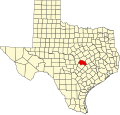
Georgetown is a city in Texas and the county seat of Williamson County, Texas, United States.[7] The population was 67,176 at the 2020 census,[4] and according to 2024 census estimates, the city is estimated to have a population of 101,344.[5] It is 30 miles (48 km) north of Austin and is part of the Austin–Round Rock–San Marcos metropolitan statistical area.
Georgetown has a notable range of Victorian commercial and residential architecture. In 1976, a local historic ordinance was passed to recognize and protect the significance of the historic central business district. In 1977, the Williamson County Courthouse Historical District, containing some 46 contributing structures, was listed on the National Register of Historic Places.[8]
Southwestern University is the oldest university in Texas. Founded in 1875 from four existing colleges, the oldest of which had been founded 35 years earlier,[9] it is in Georgetown about one-half mile from the historic square. Georgetown is known as the "Red Poppy" Capital of Texas for the red poppy wildflowers planted throughout the city. Georgetown's Red Poppy Festival, which attracts tens of thousands of visitors annually, is held in April each year on the historic square.
History
[edit]
Modern history
[edit]
Georgetown was named for George Washington Glasscock, who donated the land for the new town.[10] Early American and Swedish pioneers were attracted to the area's abundance of timber and good, clear water. In addition, the land was inexpensive and fertile. Georgetown is the county seat of Williamson County, which was formed on March 13, 1848, after the early settlers petitioned the state legislature to create it from a portion of Milam County. The county was originally to have been named San Gabriel County, but was instead named after Robert McAlpin Williamson (known as "Three-legged Willie"), a Texas statesman and judge at the time.[11]
The Cullen Building on the campus of Southwestern University shortly after completion (c. 1900)
Georgetown was an agrarian community for most of the 19th and early 20th centuries. The Shawnee Trail, a cattle trail that led from Texas to the rail centers in Kansas and Missouri, crossed through Georgetown. The establishment of Southwestern University in 1873 and construction of a railroad in 1878 contributed to the town's growth and importance. A stable economy developed, based largely on agricultural activity. Cotton was the dominant crop in the area between the 1880s and the 1920s. In this period, Williamson County was once the top producer of cotton in Texas.[12]
At one time, Georgetown was served by two national railroads, the International-Great Northern Railroad (I-GN), which eventually was merged into the Missouri Pacific, and the Missouri–Kansas–Texas Railroad (M-K-T). Both supported the transport of commodities to market: beef cattle and cotton. The regional Georgetown and Granger Railroad (GGR) was completed to Austin in 1904. Georgetown is served today by the Georgetown Railroad, a 'short line' railroad that uses portions of the former M-K-T and the I-GN to connect with the Union Pacific Railroad at Round Rock and at Granger.
Georgetown has also been home to minor league baseball: the 1914 Georgetown Collegians began play as charter members of the Class D level Middle Texas League.[13]
In 1921 a low-pressure system from a hurricane settled in over Williamson County and brought more than 23 inches of rain in Taylor and more than 18 inches of rain in Georgetown. The flooding resulted in the death of 156 persons, many of them farm laborers. There was also extensive property damage, and Georgetown residents sought to begin flood control.[14]
The U.S. Army Corps of Engineers completed construction of a dam more than 50 years later, on the north fork of the San Gabriel River, to create and impound Lake Georgetown, which opened officially on October 5, 1979.[15] Both Georgetown and Round Rock own water rights to Lake Georgetown for municipal water use.
Population growth and industrial expansion continued modestly in the 20th century until about 1960, when residential, commercial, and industrial development, due to major growth and urban expansion of nearby Austin, greatly accelerated. In 2008, Fortune Small Business magazine ranked Georgetown as the second-best city in the nation to "live and launch" a new business.[16]
In March 2015, Georgetown announced that their municipal-owned utility, Georgetown Utility Systems, would begin buying 100% of power for its customers from wind and solar farms by 2017, effectively making the city 100% green-powered.[17]
Texas historical marker for the Ku Klux Klan trials. The marker is on the Williamson County Courthouse grounds.
Klan Trials
[edit]
Between September 1923 and February 1924, District Attorney Dan Moody led a series of trials against the Ku Klux Klan at the Williamson Country Courthouse. The trials resulted in five assault convictions against members of the Ku Klux Klan for beating and tarring a white traveling salesman. The Texas Historical Commission wrote, "These trials were considered the first prosecutorial success in the United States against the 1920s Klan and quickly weakened the Klan's political influence in Texas."[18]
Burkland-Frisk House
[edit]
This 1900–1910 "pattern book" house was moved to Georgetown from Round Rock, Texas, in 2006. It overlooks the South San Gabriel River.
A densely overgrown, 1908–1910 Victorian house was found in Round Rock, Texas. (The site was later redeveloped for the La Frontera project.) The historic house was cut into pieces, and moved to Georgetown in 2006. There it was restored by Don Martin and Bill Smalling (1953–2008). It is located on San Gabriel Village Blvd, prominently overlooking the South San Gabriel River, and is now used as an office. It is known locally as the Burkland-Frisk House, as it was built by Leonard Frisk, an early settler in Williamson County, and was later owned by Tony Burkland, a relative.
Historic neighborhoods
[edit]
Typical downtown Georgetown buildings on "The Square"
In the 1970s, Georgetown's downtown was bleak and featureless. In an effort to modernize and compete with suburban retail development, building owners in the 1950s and 1960s had obscured some of their historical retail buildings. The Texas-Victorian streetscape was plastered with stucco, aluminum covers, brick, and multiple layers of white paint. Community leaders began to reassess this retail stock, and work with the Main Street program of the National Trust for Historic Preservation to enhance the architectural heritage of the city.
In this period, economics also began to favor the reuse of historic buildings, as the cost of borrowing money was soaring. In Georgetown, every bank offered significantly lower interest loans for the renewal of the town's grand Victorian buildings and facades. Rehabilitation tax credit programs in the 1980s made investing in historic property more profitable. By 1984, 40 rehabilitations were complete. Two years after Georgetown initiated its Main Street program, more than half the Main Street district had undergone some kind of positive transition.[19]
The city was recently[when?] named one of the best places to purchase a historic house. Today, Georgetown is home to one of the best-preserved Victorian and pre-WW1 downtown historic districts, with the Beaux-Arts Williamson County Courthouse (1911) as its centerpiece. Due to its successful preservation efforts, Georgetown was named a national Main Street City in 1997, the first Texas city so designated.[20] Georgetown has three National Register Historic Districts:
Williamson County Courthouse Historic District
Belford National District
The University Avenue/Elm Street District
Geography
[edit]
Blue Hole Park is a popular swimming area in Georgetown, located on the South Fork of the San Gabriel River.
Georgetown is located at 26 miles (42 km) north of Austin's central business district. According to the United States Census Bureau, the city has a total area of 60.451 square miles (156.57 km2), of which 58.147 square miles (150.60 km2) is land and 2.304 square miles (5.97 km2) (3.81%) are covered by water.[2]
Prior to the 2010 census, the city annexed part of the Serenada CDP, increasing its total area to 54.3 square miles (141 km2), of which 52.1 square miles (135 km2) was land and 2.3 square miles (6.0 km2) was water-covered.[21][22]
The city is located on the northeastern edge of Texas Hill Country. Portions of Georgetown are located on either side of the Balcones Escarpment,[23] a fault line in which the areas roughly east of IH-35 are flat and characterized by having black, fertile soils of the Blackland Prairie, and the west side of the escarpment which consists mostly of hilly, karst-like terrain with little topsoil and higher elevations and which is part of the Texas Hill Country. Inner Space Cavern, a large cave, is a major tourist attraction found on the south side of the city, just west of Interstate 35, and is a large-scale example of limestone karst formations.
The North and Middle Forks of the San Gabriel River both run through the city. More than 30 miles of hike and bike trails, several parks, and recreation for both residents and visitors are provided along their banks.
Major highways
Interstate 35
State Highway 29
State Highway 195
State Highway 130 (Toll Road)
Endangered species
[edit]
Georgetown is home to five endangered species. Two are songbirds protected by the Balcones Canyonlands Preserve in Travis and Williamson Counties.[24] Invertebrate species found only in Williamson County live in the cave-like fissures on the west side of Georgetown. Karst topography is the name for the honeycomb-type limestone formations (including caves, sinkholes, and fissures) that are typical in the county's limestone geology west of I-35.[citation needed]
In the 1990s, a small group of concerned landowners and developers formed the Northern Edwards Aquifer Resource Council. Their goal was to identify and preserve a sufficient number of caves with endangered species to ensure survival of the species. Ultimately they wanted to obtain a United States Fish and Wildlife Service 10-A permit (known as an Incidental Take Permit) for the entire county by such actions.[25] By gaining the permit, these species would be preserved through voluntary donations of land rather than by the county or state requiring setbacks and other involuntary means. The group documented their successful work in an environmental impact statement to the county in 2002, and a county-wide 10-A permit was obtained in October 2008.[26]
Climate
[edit]
According to the Köppen climate classification system, Georgetown has a humid subtropical climate, Cfa on climate maps.[27]
Georgetown, like much of Central Texas, is characterized by its long, hot summers and cooler, mild winters. The average summer temperature typically reaches 100 °F for several days during July and August. It is common for highs to be near 90 °F well into October, but by this time, the nights are noticeably cooler.[citation needed]
Winters in Georgetown have highs in the 50s and 60s, with a few days dropping near freezing, causing one or two ice storms per season. A few days reach well above the average. The region may have temperatures in the 80s well into December and 70s in January.[citation needed]
Fall, winter, and spring all average about two to three inches of rain per month, while July and August are the driest, averaging only one to two inches and sometimes no precipitation at all. Most of what rain does fall during the long summer comes from the outflow of Gulf storms that are often pushed away from the region by a large summer high-pressure system.[citation needed]
Georgetown has more than 225 days classified as mostly sunny to sunny, among a total of more than 300 days of at least partly cloudy skies per year.[citation needed]
Climate data for Georgetown Lake, Texas (1991–2020 normals, extremes 1980-present)
Month
Jan
Feb
Mar
Apr
May
Jun
Jul
Aug
Sep
Oct
Nov
Dec
Year
Record high °F (°C)
88
(31)
98
(37)
97
(36)
99
(37)
102
(39)
106
(41)
110
(43)
109
(43)
111
(44)
99
(37)
93
(34)
84
(29)
111
(44)
Mean daily maximum °F (°C)
60.3
(15.7)
64.6
(18.1)
71.5
(21.9)
78.6
(25.9)
85.4
(29.7)
92.0
(33.3)
95.9
(35.5)
96.8
(36.0)
90.1
(32.3)
81.3
(27.4)
69.8
(21.0)
61.7
(16.5)
79.0
(26.1)
Daily mean °F (°C)
48.3
(9.1)
52.3
(11.3)
59.4
(15.2)
66.4
(19.1)
74.4
(23.6)
80.7
(27.1)
84.1
(28.9)
84.4
(29.1)
78.3
(25.7)
69.0
(20.6)
58.1
(14.5)
49.9
(9.9)
67.1
(19.5)
Mean daily minimum °F (°C)
36.2
(2.3)
40.1
(4.5)
47.2
(8.4)
54.2
(12.3)
63.4
(17.4)
69.5
(20.8)
72.2
(22.3)
72.0
(22.2)
66.5
(19.2)
56.8
(13.8)
46.3
(7.9)
38.2
(3.4)
55.2
(12.9)
Record low °F (°C)
6
(−14)
6
(−14)
17
(−8)
31
(−1)
37
(3)
46
(8)
56
(13)
55
(13)
34
(1)
28
(−2)
23
(−5)
−2
(−19)
−2
(−19)
Average precipitation inches (mm)
2.50
(64)
2.24
(57)
3.09
(78)
3.02
(77)
4.25
(108)
3.97
(101)
2.19
(56)
2.64
(67)
3.96
(101)
3.92
(100)
2.71
(69)
2.59
(66)
37.08
(942)
Source: NOAA[28]
Demographics
[edit]
Historical population
Census
Pop.
Note
%±
1870
479
—
1880
1,354
182.7%
1890
2,447
80.7%
1900
2,790
14.0%
1910
2,096
−24.9%
1920
2,871
37.0%
1930
3,583
24.8%
1940
3,682
2.8%
1950
4,951
34.5%
1960
5,218
5.4%
1970
6,395
22.6%
1980
9,468
48.1%
1990
14,842
56.8%
2000
28,339
90.9%
2010
47,400
67.3%
2020
67,176
41.7%
2024 (est.)
101,344
[5]
50.9%
U.S. Decennial Census[29]
Texas Almanac: 1850-2000[30][31]
2020 Census[4]
Georgetown racial composition as of 2020[32]
(NH = Non-Hispanic)[a]
Race
Number
Percentage
White (NH)
45,555
67.81%
Black or African American (NH)
2,948
4.39%
Native American or Alaska Native (NH)
182
0.27%
Asian (NH)
1,355
2.02%
Pacific Islander (NH)
53
0.08%
Some Other Race (NH)
241
0.36%
Mixed/Multi-Racial (NH)
2,397
3.57%
Hispanic or Latino
14,445
21.5%
Total
67,176
100.00%
As of the 2020 census, there were 67,176 people, 28,845 households, and 18,965 families residing in the city.[35] The population density was 1,171.7 inhabitants per square mile (452.4/km2). There were 31,265 housing units. The racial makeup of the city was 73.9% White, 4.7% African American, 0.7% Native American, 2.1% Asian, 0.1% Pacific Islander, 6.1% from some other races and 12.4% from two or more races. Hispanic or Latino of any race were 21.5% of the population.[36] 19.1% of residents were under the age of 18, 4.8% were under 5 years of age, and 28.5% were 65 and older.
Economy
[edit]
Top employers
[edit]
According to the City's 2023 Annual Comprehensive Financial Report,[37] the largest employers in the city are:
#
Employer
# of Employees
1
Williamson County Government
1,582
2
Georgetown ISD
1,550
3
City of Georgetown
670
4
St. David's Hospital
512
5
Airborn, Inc.
482
6
Southwestern University
450
7
Wesleyan Homes
340
8
HE Butt Grocery
283
9
Caring Home Health
263
10
Sun City (Del Webb)
170
—
Total employers
6,302
Interstate Highway 35 location
[edit]
A residential condominium project overlooking the San Gabriel River is part of the San Gabriel Village mixed-use "walk-friendly" development. Photo by Don Martin.
The single most important issue relating to economic development was the location of Interstate 35 through Georgetown. Originally, when first conceived, a Georgetown route was very much in doubt, as most alignments had the road going through or near Taylor. At the time, Taylor was the economic hub of Williamson County as the center for cotton and cattle.[38] While the Taylor leadership supported the Taylor route, local farmers opposed it. The interstate required then-unheard-of 300 feet (91 m) wide of right of way across the entire county and through nearby Taylor farms, and many farmers worried that their homes might get cut off from their fields. Also, concerns were expressed about noise relating to cattle and other farm animals. Meanwhile, Round Rock and Georgetown leadership strongly lobbied for a route along the Balcones Escarpment fault line, which would later become U.S. Highway 81 and then eventually I-35.[39]
Sun City
[edit]
Main article: Sun City Texas
Sun City has had a significant impact on Georgetown in terms of population and demographics.A Sun City Texas pool at the most recent neighborhood amenity center at Cowan Creek
The second-largest economic development activity in Georgetown history was the selection in 1995 of Georgetown as the site for the first-ever Sun City location in Texas. Originally called Sun City Georgetown, the project today is called Sun City Texas due to its size and because it draws residents from all over the state. As of 2021[update], about 15,700 people live in the massive, 4,700-acre (and expanding) community,[40] with an average net worth over $1,000,000 per person. The economic stimulus, creation of sales tax, banking and investment, and the high rate of community support and volunteerism has had an enormous effect on Georgetown.[41]
Opened in June 1995, Sun City Texas is a 5,300-acre (21 km2) age-restricted community located in Georgetown, about 10 miles west of I-35 on Williams Drive (RM 2338). It is part of the chain of Sun City communities started by the Del E. Webb Construction Company (now a division of PulteGroup).[42] Residency is restricted to persons over age 55 (at least one person in a couple has to be 55 or older).[43] Sun City Texas is made up mostly of single-family dwellings, but also has duplexes. It is legal to drive golf carts on the streets in the development (under a special Texas license exemption with help from Del Webb), and most shopping and the community facilities all have special parking slots for them.[44]
Opposition to the project has been vocal at times, especially at the start during the zoning process, with arguments against the size of the community, its effect on Georgetown as a family-oriented town, concerns about the costs of providing city utilities, concern about lowered property taxes fixed for retirees under Texas law, and the disproportionate effect of city voting.[45]
Georgetown is considered to be one of the best places to retire in the nation because of its fairly warm climate year round, close proximity to both the countryside and Austin, excellent medical care including Alzheimer's care, and its increasing population of retirees.[46] In 2007, Georgetown was named by Retirement Places Rated (seventh edition) as the Best Place in America to Retire.[47] Part of this is because Sun City Texas, a large master-planned community for "active adults 55 and over", calls Georgetown home. Twenty-five years after the project groundbreaking, Sun City is now home to nearly 16,000 residents and has been a driving force behind growth, development, and the very shape of Georgetown since its inception.[40]
Numerous other active adult communities are also found in Georgetown, including the well-respected Wesleyan at Estrella, the Oaks at Wildwood, Heritage Oaks, and many others.[48] Various projects offer differing levels of care, including assisted living. The city, county, and churches also maintain compassionate-care facilities for the elderly at the Bluebonnet Community Residence.
Energy policy
[edit]
Georgetown is the first Texas city to operate entirely on renewable energy.[49] Georgetown's projected power expenditures were $33 million for 2016 (spent $40 million); $39 million for 2017 (spent $46 million) and $45 million for 2018 (spent $53 million). It made up the shortfall through lower capital investments, rate adjustments, and "higher revenue" (tax).[50] The average home power bill in the city increased 22% in 2019 compared to 2018.[51]
Government and politics
[edit]
City government
[edit]
The City of Georgetown is a home rule city and adopted its initial home-rule charter on April 24, 1970. As provided by its charter, Georgetown has a council-manager form of government. Under this form of government, the city council provides leadership by establishing the city's goals and policies. The city council appoints a full-time city manager to achieve the desired end set by the city council. The manager oversees the day-to-day activities of the city and all city departments and executes council-established laws and policies. The city council is composed of seven council members elected by geographic districts:[52]
District 1 – Amanda Parr
District 2 – Shawn Hood
District 3 – Ben Butler
District 4 – Ron Garland
District 5 – Kevin Pitts
District 6 – Jake French
District 7 – Ben Steward
A mayor is elected at-large. Each position is elected for a term of three years, with council districts with staggered election dates. Lloyd "Dale" Ross was elected mayor in 2015 and served until 2020.[53] Josh Schroeder was elected mayor in 2020 with 64.54% of the vote and reelected in May 2023 with 85.6% of the vote.[54] He will serve until May 2026. David Morgan was hired by the City Council as the City Manager in 2015.[55]
State and national representation
[edit]
Texas House of Representatives:
State Representative District 20 – Terry Wilson (R) – elected November 2012
State Representative District 52 – James Talarico (D) – elected November 2018
Texas Senate
Texas Senate District 5 – Charles Schwertner (R) – elected November 2012
United States House of Representatives:
Texas's 31st congressional district – John R. Carter (R)
Education
[edit]
The Georgetown Public Library
The city of Georgetown is served by the Georgetown Independent School District, partially by Leander Independent School District and Georgetown High School, a National Blue Ribbon Award school, serves the community. Georgetown opened a second high school, East View High, in 2008. The graduating class of 2014 was the first class of students to graduate from East View as a full high school. Up to that point, East View High School had started as a freshman-only campus and added on one grade at a time as those students moved up.
Georgetown is the home of Southwestern University, a private, four-year, undergraduate, liberal arts college.[56] Founded in 1875,[57] Southwestern is the oldest university in Texas. The school is affiliated with the United Methodist Church, although the curriculum is nonsectarian. Southwestern offers 40 bachelor's degrees in the arts, sciences, fine arts, and music, as well as interdisciplinary and pre-professional programs. The university is accredited by the Southern Association of Colleges and Schools and the National Association of Schools of Music.
Sites of interest
[edit]
This section does not cite any sources. Please help improve this section by adding citations to reliable sources. Unsourced material may be challenged and removed.(August 2018) (Learn how and when to remove this message)
The Palace Theatre is a historic theater in downtown Georgetown.The unusually designed M. B. Lockett Building in Courthouse Square in GeorgetownThe Grace Heritage Center is located in a former church building downtown.
Williamson County Courthouse
Williamson County Art Guild
Berry Springs Park
Sun City Texas
Blue Hole Park
San Gabriel Park
Georgetown Firefighters Museum
Inner Space Cavern
Lake Georgetown
Georgetown Municipal Airport
The Levy House
Palace Theatre
Georgetown Art Center
Garey Park
Booty's Park
In popular culture
[edit]
List partly from material provided by the Texas Film Commission[58]
Friday Night Lights, both the film and the TV series
Leadbelly
Grindhouse
Bernie
My Boyfriend's Back
Natural Selection
The Big Picture
Picnic
Über Goober
Pair of Aces
What's Eating Gilbert Grape
Night Job
Johnny Be Good
Michael – a 1996 Nora Ephron film
Varsity Blues
Lemmy Lemmy
Where the Heart Is
Shady Grove
The Prophet of Armageddon
Dazed and Confused
Hope Floats
Temple Grandin
Men, Women & Children
Notable people
[edit]
Brian Anderson, sports announcer: Turner Sports, Milwaukee Brewers[59]
Mason Crosby, NFL kicker, Green Bay Packers, 2010 Super Bowl XLV champion[60]
Matt Dominguez, a Grey Cup winner and 2006 All-Star wide receiver with the Saskatchewan Roughriders of the Canadian Football League[61]
Thomas Fletcher, NFL Long Snapper, Carolina Panthers
Conan Gray, singer-songwriter, internet personality, awarded 'Best YouTube Musician' at the 2019 Shorty Award[62]
Ryan Ludwick, a Major League Baseball outfielder who last played for the Cincinnati Reds[63]
Granger Smith, singer-songwriter, Country Music, 2016 BMI Awards won the BMI Country Award, 2017 IHeartRadio Music Awards nominated for Best New Country Artist
James Willbanks, military historian
Paul Wall, rapper
Notes
[edit]
^Note: the US Census treats Hispanic/Latino as an ethnic category. This table excludes Latinos from the racial categories and assigns them to a separate category. Hispanics/Latinos can be of any race.[33][34]
References
[edit]
^
"Georgetown, TX (Williamson County)". Texas State Historical Association. Retrieved June 10, 2024.
^ ab"2024 U.S. Gazetteer Files". United States Census Bureau. Retrieved May 18, 2025.
^ abU.S. Geological Survey Geographic Names Information System: Georgetown, Texas
^ abc"Explore Census Data". United States Census Bureau. Retrieved June 10, 2024.
^ abc"City and Town Population Totals: 2020–2024". United States Census Bureau. Retrieved May 18, 2025.
^"Georgetown (TX) sales tax rate". Retrieved June 10, 2024.
^"Find a County". National Association of Counties. Archived from the original on May 31, 2011. Retrieved June 7, 2011.
^"Georgetown Mainstreet History". Archived from the original on July 6, 2010. Retrieved May 3, 2017.
^"Our History".
^Association, Texas State Historical. "Glasscock, George Washington". Texas State Historical Association. Retrieved May 20, 2024.
^"Williamson, Robert McAlpin (Three Legged Willie)" Archived May 9, 2018, at the Wayback Machine. Handbook of Texas Online. Retrieved July 26, 2010.
^McLemore, Andrew (August 15, 2010). "Cotton County". Williamson County Sun.
^"1914 Georgetown Collegians Statistics".
^Scarbrough, Linda (2009). Road, River and Good Ol' Boy Politics: A Texas County's Path from Farm to Supersuburb. Austin, Texas: Texas State Historical Association. pp. 36, 42. ISBN 9780876112359.
^Scarbrough, Linda (2009). Road, River and Good Ol' Boy Politics: A Texas County's Path from Farm to Supersuburb. Austin, Texas: Texas State Historical Association. p. 233. ISBN 9780876112359.
^"100 Best places to live and launch 2008: Top 100 - Fortune Small Business Magazine". money.cnn.com. Archived from the original on November 17, 2019. Retrieved November 17, 2019.
^Daniel Gross (March 23, 2015). "The Texas Town That Just Quit Fossil Fuels". Slate. Archived from the original on March 8, 2017. Retrieved March 7, 2017.
^"Texas Historical Marker for the Trials". October 8, 2017.
^Georgetown Texas. Archived February 22, 2010, at the Wayback Machine National Trust for Historic Places. 1977.
^Georgetown Texas. Archived February 22, 2010, at the Wayback Machine Georgetown, Texas 1997 Great American Main Street Award Winner. National Trust for Historic Places. 1997.
^"Population and Housing Unit Counts, 2010 Census of Population and Housing" (PDF). Texas: 2010. Archived (PDF) from the original on February 13, 2017. Retrieved January 6, 2017.
^"Boundary Map of Georgetown, Texas". MapTechnica. Archived from the original on January 6, 2017. Retrieved January 6, 2017.
^Balcones Escarpment from the Handbook of Texas Online. Retrieved May 11, 2010. Texas State Historical Association
^"Protected Species | Williamson County, TX". www.wilcotx.gov. Retrieved January 14, 2025.
^Barrios, Jennifer (September 30, 2004). "Grant will help creepier residents. $2.35 million to save beetles, spiders and other endangered species". Austin American-Statesman. p. A1.
^Doolittle, David (October 23, 2008). "Plan to protect species gets OK; U.S. Fish & Wildlife Service gives approval". Austin American-Statesman.
^"Georgetown, Texas Köppen Climate Classification (Weatherbase)". Weatherbase. Archived from the original on March 4, 2016. Retrieved May 3, 2017.
^"Census of Population and Housing". United States Census Bureau. Retrieved June 4, 2015.
^Texas Almanac. "Texas Almanac: City Population History from 1850–2000" (PDF). Retrieved June 10, 2024.
^Texas Almanac. "Texas Almanac: Population History of Counties from 1850–2010" (PDF). Retrieved June 10, 2024.
^"Explore Census Data". data.census.gov. Retrieved May 24, 2022.
^http://www.census.gov [not specific enough to verify]
^"About the Hispanic Population and its Origin". www.census.gov. Retrieved May 18, 2022.
^"US Census Bureau, Table P16: Household Type". United States Census Bureau. Retrieved June 10, 2024.
^"How many people live in Georgetown city, Texas". USA Today. Retrieved June 10, 2024.
^"Misc. Statistical Information". June 10, 2024. p. 188.
^Scarbrough, Linda (2009). Road, River and Good Ol' Boy Politics: A Texas County's Path from Farm to Supersuburb. Austin, Texas: Texas State Historical Association. p. Chapter 13. ISBN 9780876112359.
^Scarbrough, Linda (2009). Road, River and Good Ol' Boy Politics: A Texas County's Path from Farm to Supersuburb. Austin, Texas: Texas State Historical Association. p. 245. ISBN 9780876112359.
^ abFigueroa, Fernanda (April 15, 2021). "In 25 years, Sun City adds nearly 8,500 new homes, 15,700 residents". communityimpact.com. Community Impact Newspaper. Retrieved January 14, 2022.
^Rasmussen, Blake; Suzanne Haberman (August 13, 2010). "Fifteen years later, Sun City still drives city growth". Community Impact Newspaper. p. A1. Archived from the original on April 20, 2011. Retrieved August 17, 2010.
^Novak, Shonda (April 9, 2009). "Builders Pulte, Centex to combine in deal with national significance, Merger might be sign of industry rebound". Austin American-Statesman. p. B–07. Archived from the original on June 9, 2011.
^Ward, Pamela (November 9, 1996). "ON COURSE FOR A GRAND OPENING IN SUN CITY". Austin American-Statesman. p. B–1. Archived from the original on June 9, 2011. Retrieved July 18, 2010.
^"Del Webb Sun City Texas, About Our Community". Del Webb Active Adult Retirement Communities. Archived from the original on June 18, 2012. Retrieved July 18, 2010.
^Banta, Bob (April 10, 2008). "Mayoral hopefuls let their work talk". Austin American-Statesman. pp. W–01.
^Rasmussen, Blake; Suzanne Haberman (August 13, 2010). "Fifteen years later Sun City still drives Georgetown growth". Community Impact Newspaper. Archived from the original on April 20, 2011. Retrieved August 16, 2010.
^Shaver, Karin (October 7, 2007). "New Housing Developments; The Wesleyan at Estrella". Community Impact News. Archived from the original on July 13, 2011. Retrieved August 16, 2010.
^Tilove, Jonathan (October 23, 2017). "How Georgetown's GOP mayor became a hero to climate change evangelists". Austin American. Archived from the original on November 20, 2018. Retrieved November 20, 2018.
^Osborn, Claire. "Georgetown renegotiating solar, wind power contracts". Austin American-Statesman. Archived from the original on July 15, 2019. Retrieved June 8, 2019.
^"POLITICO Pro". Archived from the original on November 5, 2019. Retrieved November 7, 2019.
^Taylor, Steven. "City Council". Georgetown Texas. Retrieved August 17, 2025.
^[1] Retrieved July 5, 2020
^"Election results for Mayor and Council Districts 2 and 6". City of Georgetown, Texas. May 6, 2023.
^Pham, Tadd (January 21, 2021). "City Management". City Government. Archived from the original on June 15, 2017. Retrieved May 3, 2017.
^"Handbook of Texas Online, "Southwestern University" entry". Texas State History Association. Archived from the original on July 10, 2011. Retrieved April 12, 2019.
^"Southwestern University Original Site of in Georgetown Williamson County Historical Texas". Archived from the original on May 15, 2021. Retrieved January 28, 2021.
^Katie Kelley, Office Manager – Texas Film Commission. Email July 23, 2009
^"Brewers TV announcer Brian Anderson has hectic spring schedule that includes basketball and golf, too". Milwaukee Journal Sentinel. Retrieved November 17, 2019.
^"Mason Crosby". www.packers.com. Retrieved November 17, 2019.
^"Former Rider Dominguez giving back to sport that made him a star". CFL.ca. November 30, 2018. Archived from the original on November 17, 2019. Retrieved November 17, 2019.
^"Conan Gray – The Shorty Awards". shortyawards.com. Archived from the original on March 20, 2019. Retrieved July 11, 2019.
^"Ryan Ludwick Stats". Baseball-Reference.com. Archived from the original on November 6, 2019. Retrieved November 17, 2019.
External links
[edit]
Wikimedia Commons has media related to Georgetown, Texas.
Wikisource has the text of a 1911 Encyclopædia Britannica article about Georgetown, Texas.
City of Georgetown – Official Website
v
t
e
Municipalities and communities of Williamson County, Texas, United States
County seat: Georgetown
Cities
Austin‡
Bartlett‡
Cedar Park‡
Coupland
Florence
Georgetown
Granger
Hutto
Jarrell
Leander‡
Liberty Hill
Pflugerville‡
Round Rock‡
Taylor
Thorndale‡
Thrall
Weir
Williamson County map
CDPs
Brushy Creek
Jollyville‡ (former)
Santa Rita Ranch
Serenada
Sonterra
Other
communities
Hare
Jonah
Macedonia
Norman's Crossing
Rice's Crossing
Schwertner
Walburg
Waterloo
Ghost town
Allison
Bagdad
Palm Valley
Footnotes
‡This populated place also has portions in an adjacent county or counties